
 Save
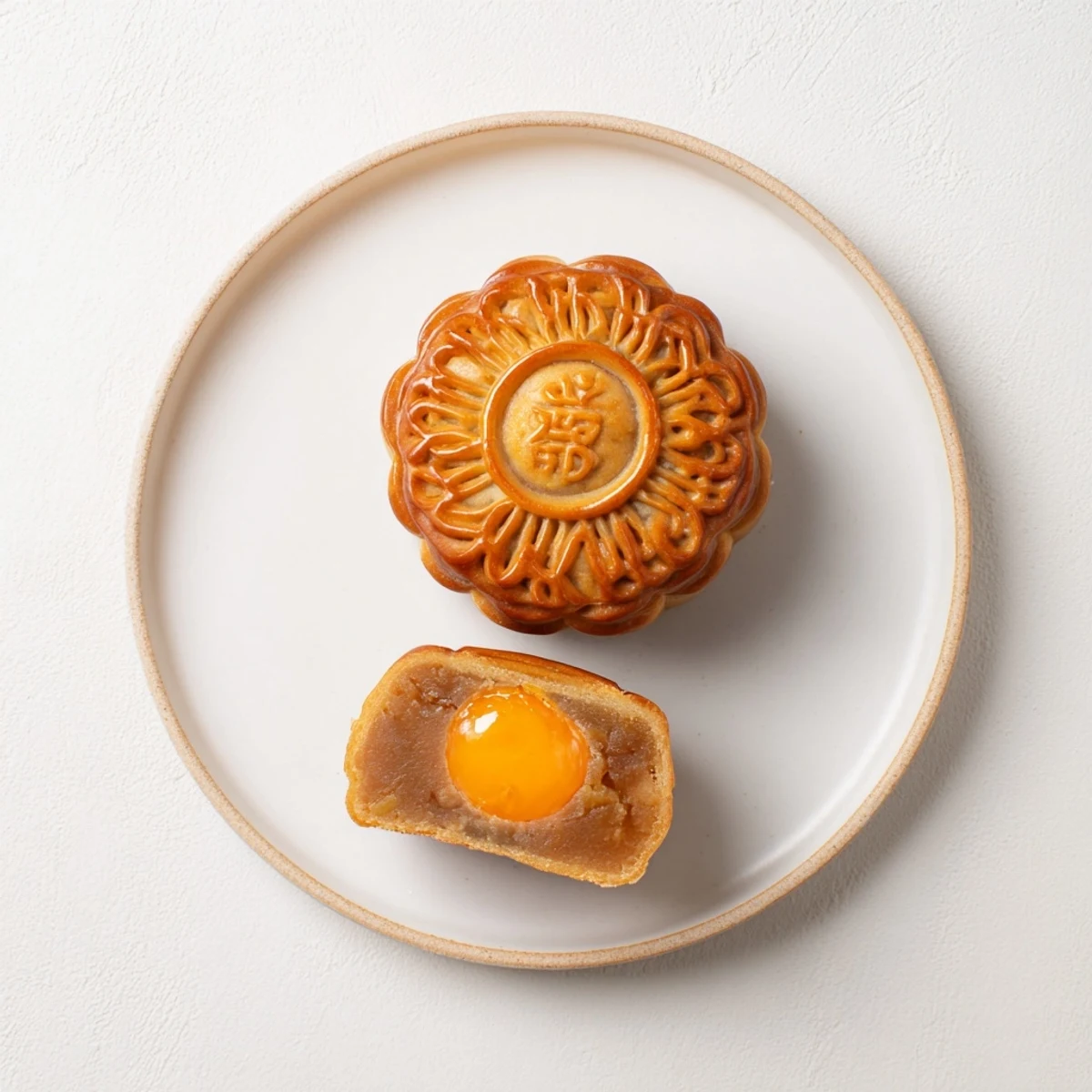
Save Create these traditional Chinese delicacies featuring a tender, golden-skinned pastry wrapped around sweet lotus seed paste with an optional rich salted egg yolk center. The dough combines golden syrup and alkaline water for that signature glossy finish and distinct mooncake texture.
After shaping with traditional molds, a quick initial bake sets the structure before an egg wash creates the beautiful burnished surface. The pastry requires a resting period of 1-2 days to achieve the characteristic soft, tender skin that contrasts perfectly with the dense, sweet filling.
Customize with red bean or black sesame paste, omit the egg components for a vegan version, and serve alongside Chinese tea for the complete authentic experience.
The kitchen smelled like golden syrup and anticipation the first time I attempted mooncakes. My grandmother hovered nearby, explaining that Mid-Autumn Festival was not just about the full moon, but about the patience required to wrap delicate pastry around dense, sweet filling. I watched the syrup glisten in the bowl, never guessing this sticky mixture would become an annual tradition that taught me more about precision than any French technique.
Last autumn, my neighbor Mrs. Chen brought over her grandmother is brass mooncake mold, its floral pattern worn smooth by decades of use. She told me mooncakes taste better after resting for two days, something about the skin softening and the flavors melding. Now I make them a week before the festival, hiding the container away even though they are already calling my name from the cupboard.
Ingredients
- 200 g all-purpose flour: Forms the tender golden skin that holds everything together
- 120 g golden syrup: This honey colored sweetness gives mooncakes their signature glossy finish
- 50 g vegetable oil: Creates a pliable dough that would not crack during wrapping
- 1 tsp alkaline water: The secret ingredient that gives mooncakes their characteristic amber color
- 500 g lotus seed paste: Smooth, creamy, and traditionally the most beloved filling
- 12 salted egg yolks: Optional but traditional, these golden centers represent the full moon
- 1 egg yolk mixed with 1 tbsp water: Creates that beautiful burnished shine after baking
Instructions
- Prepare your workspace:
- Preheat oven to 180°C 350°F and line a baking tray with parchment paper
- Mix the wet ingredients:
- Combine golden syrup, vegetable oil, and alkaline water until smooth and emulsified
- Form the dough:
- Add flour to the wet mixture, stir until a soft dough forms, then cover and rest for 30 minutes
- Prepare the filling:
- Divide lotus paste into 12 portions about 40 g each, nestling a salted egg yolk inside if using
- Portion the dough:
- Divide rested dough into 12 equal pieces about 25 g each
- Wrap the filling:
- Flatten dough into discs, enclose filling completely, and seal edges with gentle pressure
- Mold the mooncakes:
- Dust lightly with flour, press into mold, then invert onto baking tray
- Initial bake:
- Bake for 5 minutes then cool for 10 minutes before glazing
- Glaze and finish:
- Brush with egg yolk mixture and return to oven for 15 to 20 minutes until golden brown
- The waiting game:
- Cool completely then store airtight for 1 to 2 days to soften the skin
 Save
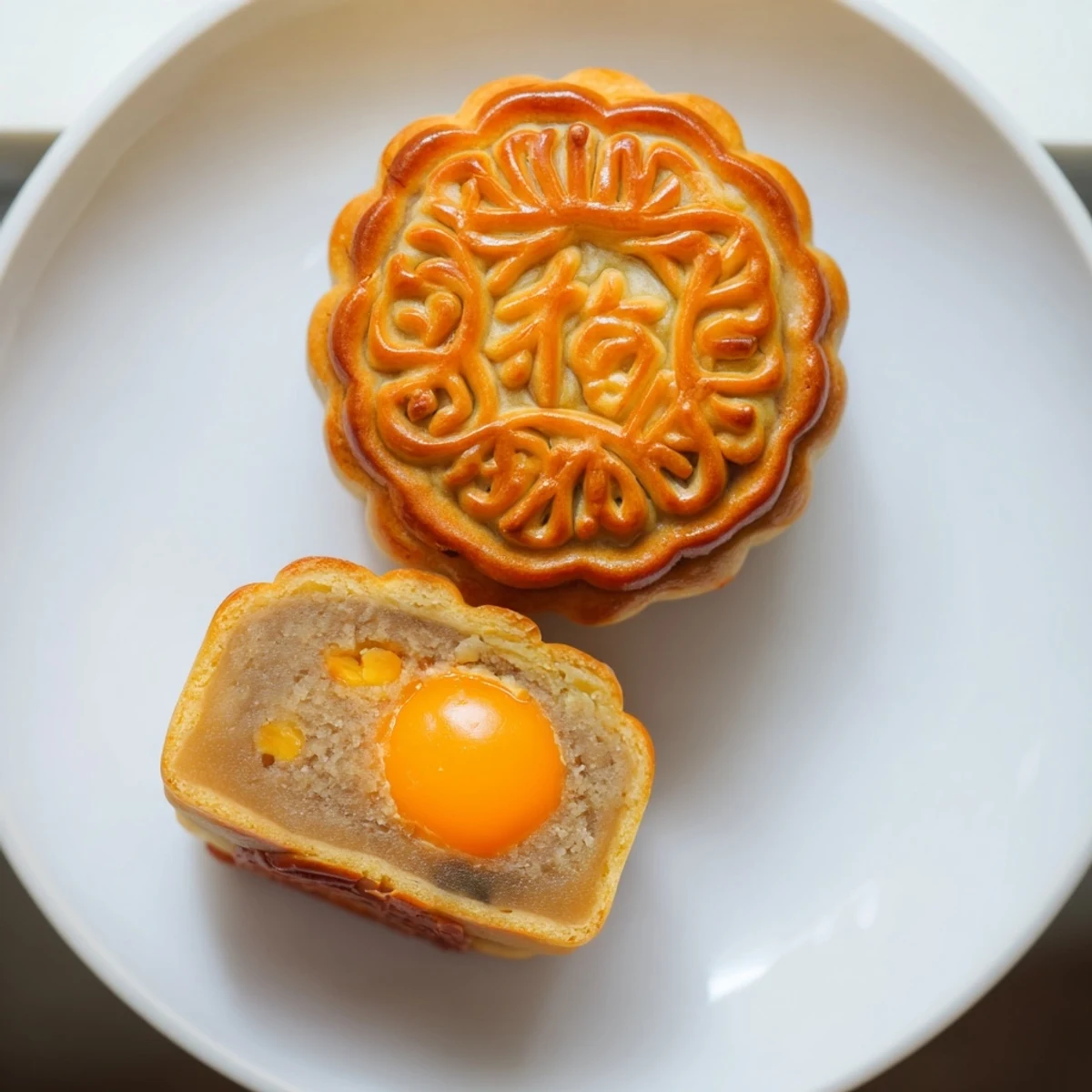
Save My first batch looked like lumpy asteroids rather than the delicate floral rounds I had imagined. But after slicing through that first misshapen mooncake, revealing the golden yolk center and tasting the buttery lotus paste, nobody seemed to mind their irregular shape. Sometimes the ugliest ones taste the sweetest.
Choosing Your Filling
Lotus seed paste is classic, but red bean paste offers a earthier sweetness that some prefer. Black sesame paste adds nutty depth, while modern variations might incorporate durian or even chocolate. Whatever you choose, the filling should be pliable enough to shape but firm enough to hold its weight inside the dough.
Working with Molds
Traditional wooden molds develop a seasoning over time that helps release the dough cleanly. If using plastic molds, dust them generously with flour. Press firmly but do not force it, and tap the mold against your palm before inverting to help the mooncake release intact.
Serving and Storage
Mooncakes are incredibly rich, meant to be sliced into small wedges and shared with Chinese tea. Pu erh cuts through the sweetness, while oolong complements the lotus flavors. Store in an airtight container at room temperature and enjoy within two weeks for best texture.
- Warm slices briefly before serving if the mooncake has been refrigerated
- A sharp knife dipped in hot water cuts cleanly through sticky fillings
- Share these with friends under the full moon for the full experience
 Save
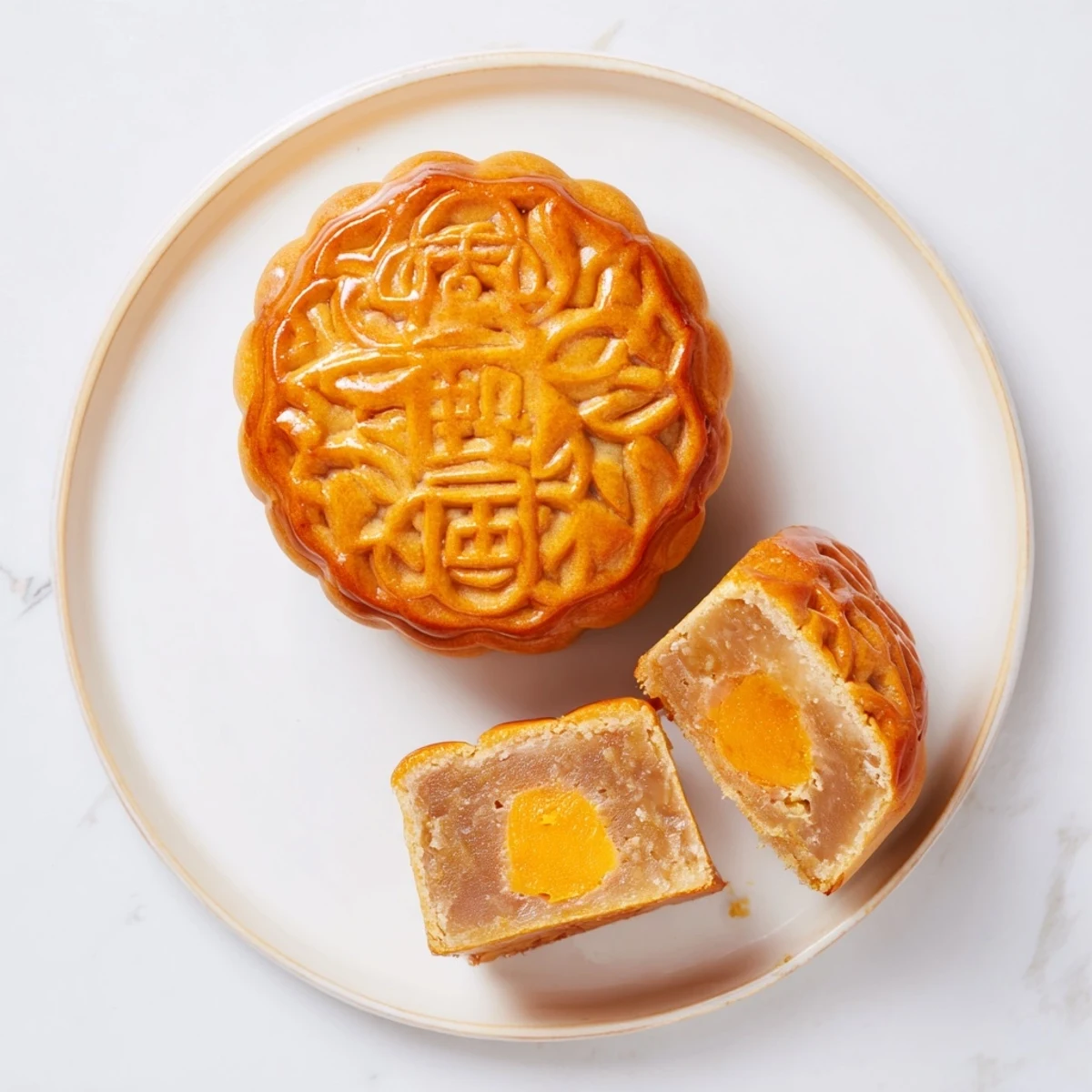
Save There is something profoundly satisfying about slicing into a mooncake you have made yourself, revealing those perfect concentric circles of pastry and filling. May your kitchen fill with the scent of golden syrup and your Mid-Autumn Festival be full of sweet moments shared.
Recipe FAQs
- → Why do mooncakes need to rest before eating?
-
The resting period allows the pastry skin to soften and develop the signature tender texture. Freshly baked mooncakes have a firmer exterior, but after 1-2 days in an airtight container, the moisture from the filling redistributes throughout the dough, creating the traditional soft, yielding mouthfeel.
- → Can I make mooncakes without a traditional mold?
-
While traditional molds create the classic decorative patterns and uniform shape, you can shape them by hand. Roll the filled dough into smooth balls and gently flatten slightly. You can also use a cookie press or create decorative patterns with a fork or knife, though the appearance will differ from traditional mooncakes.
- → What's the purpose of alkaline water in mooncake dough?
-
Alkaline water (lye water) serves multiple purposes: it gives the pastry its characteristic golden color, creates the distinct aroma associated with traditional mooncakes, and helps develop a tender yet sturdy dough structure that holds its shape during baking. It also neutralizes the acidity in the golden syrup.
- → How do I prevent the filling from leaking during baking?
-
Ensure the dough completely encases the filling with no gaps or thin spots. Seal edges thoroughly by pinching and smoothing. If using salted egg yolks, fully surround them with paste so they're not touching the dough directly. Don't overfill, and chill the assembled mooncakes briefly before baking to help them hold their shape.
- → Can I substitute the golden syrup?
-
Golden syrup is essential for authentic mooncake texture and flavor. Honey or corn syrup can work in a pinch, but the results will differ. Golden syrup provides the right balance of sweetness, color, and moisture retention that creates the traditional tender pastry and characteristic taste.
- → How long do homemade mooncakes last?
-
Properly stored in an airtight container at room temperature, homemade mooncakes typically last 1-2 weeks. Refrigerated, they can last up to a month but may become slightly firmer. For longer storage, freeze them for up to 3 months, though the texture may change slightly upon thawing.