
 Save
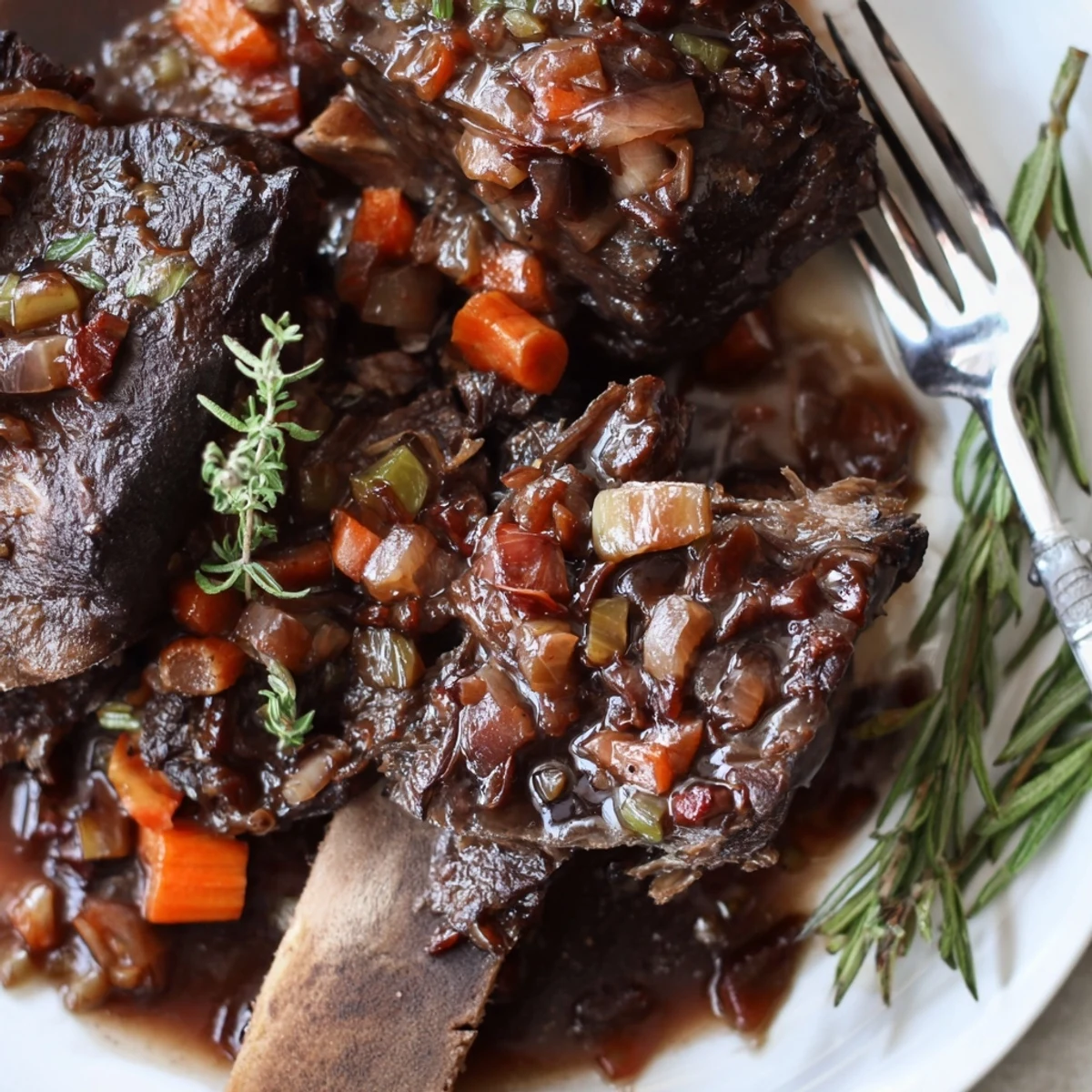
Save These oven-braised beef short ribs are seared to develop a rich crust, then slowly simmered in a fragrant blend of red wine, beef broth, carrots, celery, and onions.
Cooked low and slow at 325°F for roughly 2.5 to 3 hours, the meat becomes incredibly fork-tender and practically falls off the bone.
Fresh rosemary, thyme, and bay leaves infuse the braising liquid with earthy, aromatic depth, creating a luscious sauce to spoon over the finished ribs.
Serve over mashed potatoes, polenta, or crusty bread to soak up every bit of the deeply savory, wine-infused sauce.
The rain was hammering against the kitchen window the afternoon I decided short ribs were the only reasonable response to a gloomy Saturday. The oven did most of the work while I sat on the floor flipping through an old cookbook, half reading and half just breathing in the smell of wine and rosemary curling through the house. That braise turned a miserable day into something I actually wanted to remember.
I made these for my neighbor once after she mentioned she had never tried short ribs, and she stood in my kitchen eating straight from the Dutch oven with a fork.
Ingredients
- Beef short ribs, bone-in, 4 lbs (1.8 kg): Bone-in is nonnegotiable because the marrow gives the sauce a velvety richness you simply cannot get otherwise.
- Carrots, 2 medium, diced: They melt into the braise and add natural sweetness that balances the wine.
- Celery, 2 stalks, diced: Celery brings a quiet earthiness that you notice most when it is missing.
- Yellow onion, 1 large, diced: The backbone of the aromatics, so dice it small and let it really soften.
- Garlic, 4 cloves, minced: Fresh garlic only, and add it late so it does not scorch and turn bitter.
- Dry red wine, 1 cup (240 ml): Something you would actually drink, because the flavor concentrates and any harshness amplifies.
- Beef broth, 2 cups (480 ml): Check the label if you need gluten-free because not all broths are created equal.
- Tomato paste, 1 tbsp: A small spoonful adds body and a subtle tang that ties everything together.
- Fresh rosemary, 2 sprigs: Woody and piney, it stands up beautifully to long cooking times.
- Fresh thyme, 3 sprigs: Thyme and beef are old friends, so trust that pairing.
- Bay leaves, 2: Remove them before serving because they have done their job by then.
- Salt, 1 tsp plus more for seasoning: Season in layers and taste as you go.
- Black pepper, 1/2 tsp plus more for seasoning: Freshly cracked always, the pre-ground stuff tastes flat.
- Olive oil, 2 tbsp: Just enough to get a hard sear on the ribs.
Instructions
- Preheat and prepare:
- Set your oven to 325 degrees F (160 degrees C) and pat the short ribs completely dry with paper towels. Season every side generously with salt and pepper because this is your only chance to season the meat directly.
- Sear the ribs:
- Heat olive oil in a large Dutch oven over medium-high heat until it shimmers, then sear the ribs in batches until deeply browned on all sides, about 2 to 3 minutes per side. Do not crowd the pot or you will steam instead of sear, and that crust is everything.
- Build the aromatic base:
- Transfer the ribs to a plate and add the carrots, celery, and onion to the same pot, stirring until softened, about 5 minutes. Stir in the garlic and tomato paste for one more minute until everything smells rich and slightly sweet.
- De-glaze with wine:
- Pour in the red wine and scrape up every last browned bit stuck to the bottom of the pot because that is pure flavor. Let it come to a boil and reduce by half, about 5 minutes, so the alcohol cooks off and the liquid concentrates.
- Braise low and slow:
- Nestle the ribs back into the pot, add the broth, rosemary, thyme, and bay leaves, then bring to a gentle simmer on the stovetop. Cover tightly and transfer to the oven for 2.5 to 3 hours until the meat is fork-tender and practically collapsing off the bone.
- Finish and serve:
- Remove the ribs and vegetables, then skim the excess fat from the sauce and discard the herb sprigs and bay leaves. Serve the ribs piping hot with the sauce spooned generously over the top.
 Save
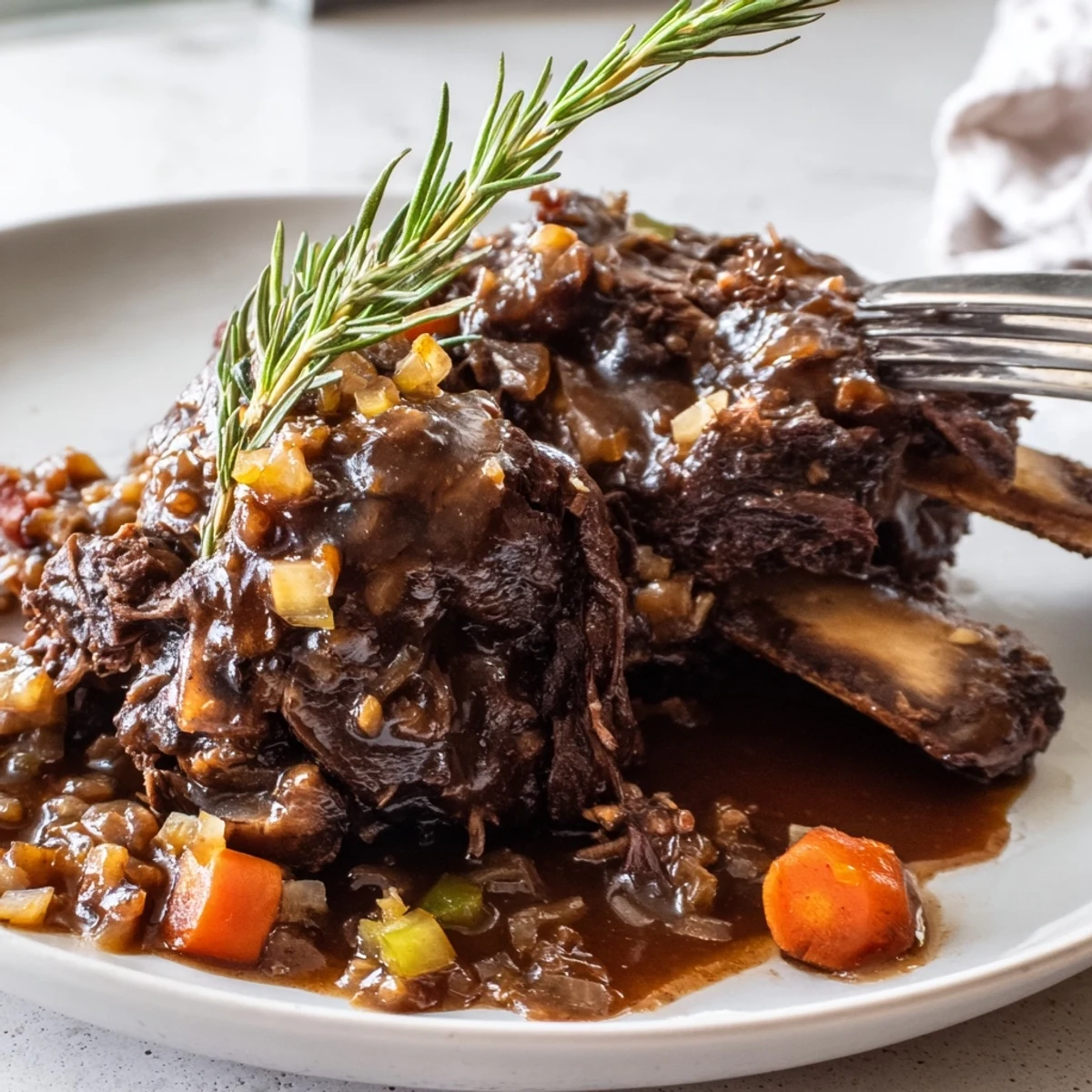
Save There is something about lifting the lid off a Dutch oven after three hours that makes everyone in the house migrate toward the kitchen without being called.
What to Serve Alongside
Mashed potatoes are the classic move because they soak up the sauce like nothing else, but creamy polenta is equally brilliant and somehow feels a little more special. A chunk of crusty bread on the side works too if you want to keep things simple and rustic.
Making It Ahead
Short ribs actually taste better the next day because the fat flavors meld and the sauce thickens into something almost silky. I have started making them a day ahead on purpose, then gently reheating on the stove when guests arrive.
A Few Last Thoughts
Trust the process because the oven is doing the real work here. Your job is mostly patience and a willingness to let things take the time they need.
- If you want even deeper flavor, marinate the ribs in wine and herbs overnight in the fridge.
- You can swap the red wine for extra broth if you prefer to cook without alcohol.
- A heavy Dutch oven with a tight-fitting lid is the single most important tool for this recipe.
 Save
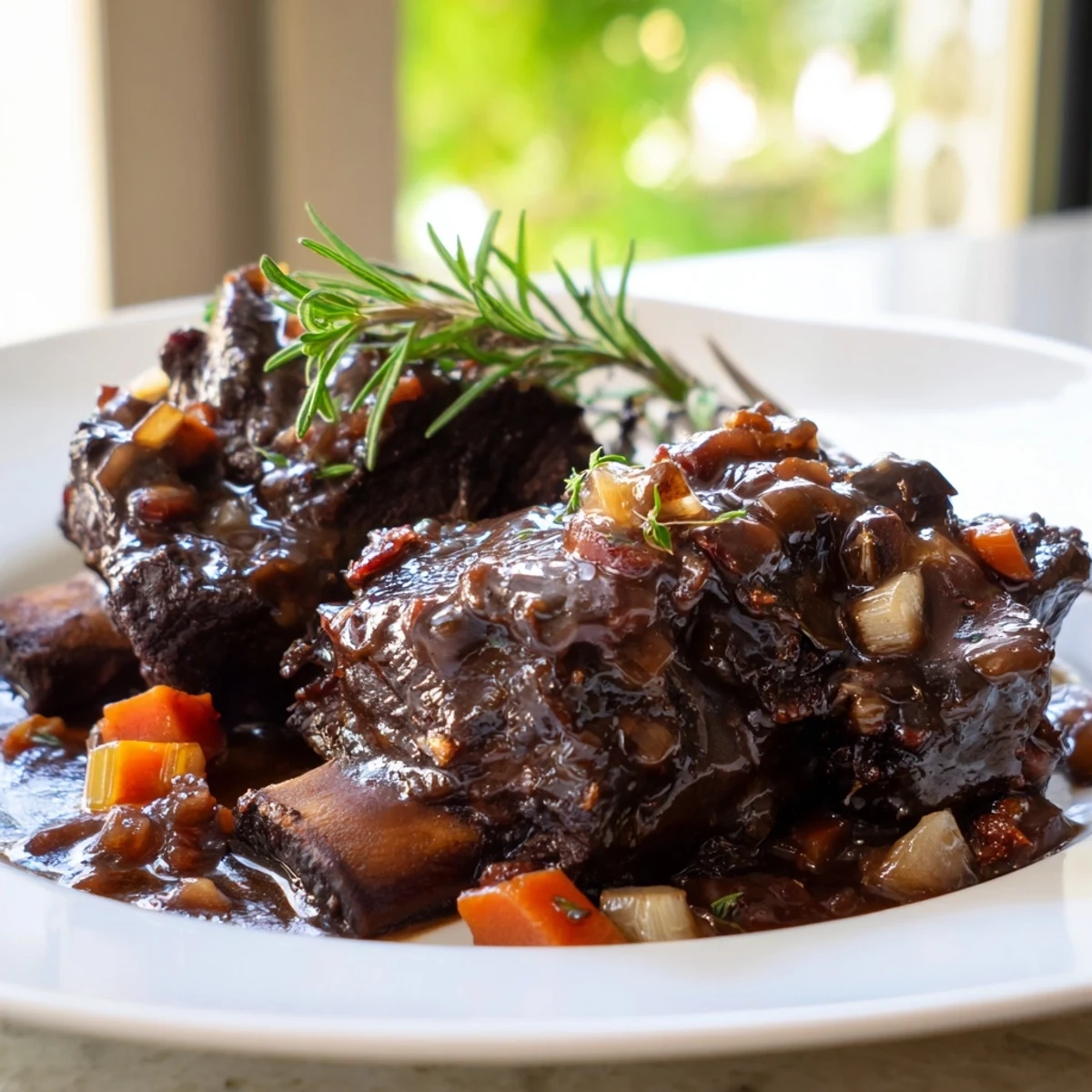
Save Some meals are worth waiting for, and these short ribs are the proof that a few humble ingredients plus time can become something unforgettable.
Recipe FAQs
- → What cut of beef short ribs works best for braising?
-
Bone-in beef short ribs are ideal for braising because the bone adds richness and body to the braising liquid while the connective tissue breaks down into gelatin, creating that signature melt-in-your-mouth texture.
- → Can I prepare braised short ribs ahead of time?
-
Yes, braised short ribs actually taste better the next day. After cooking, let them cool completely and refrigerate overnight. The flavors deepen and the fat solidifies on top, making it easy to remove before reheating gently on the stovetop or in a 325°F oven.
- → What type of red wine should I use for braising?
-
Dry red wines like Cabernet Sauvignon, Merlot, or Pinot Noir work beautifully. Choose a wine you would enjoy drinking, as its flavor concentrates during the braising process. Avoid overly sweet or heavily oaked varieties.
- → How do I know when the short ribs are done braising?
-
The ribs are ready when the meat is fork-tender and easily pulls away from the bone. You should be able to slide a fork into the meat with almost no resistance. This typically takes 2.5 to 3 hours at 325°F.
- → Can I make this without wine for an alcohol-free version?
-
Absolutely. Simply replace the red wine with an equal amount of additional beef broth. You can also add a splash of balsamic vinegar or grape juice to mimic some of the acidity and depth that wine provides.
- → Why do I need to sear the ribs before braising?
-
Searing creates a caramelized crust through the Maillard reaction, which adds layers of deep, savory flavor to both the meat and the braising liquid. This step is essential for building the rich, complex taste that makes braised ribs so satisfying.