
 Save
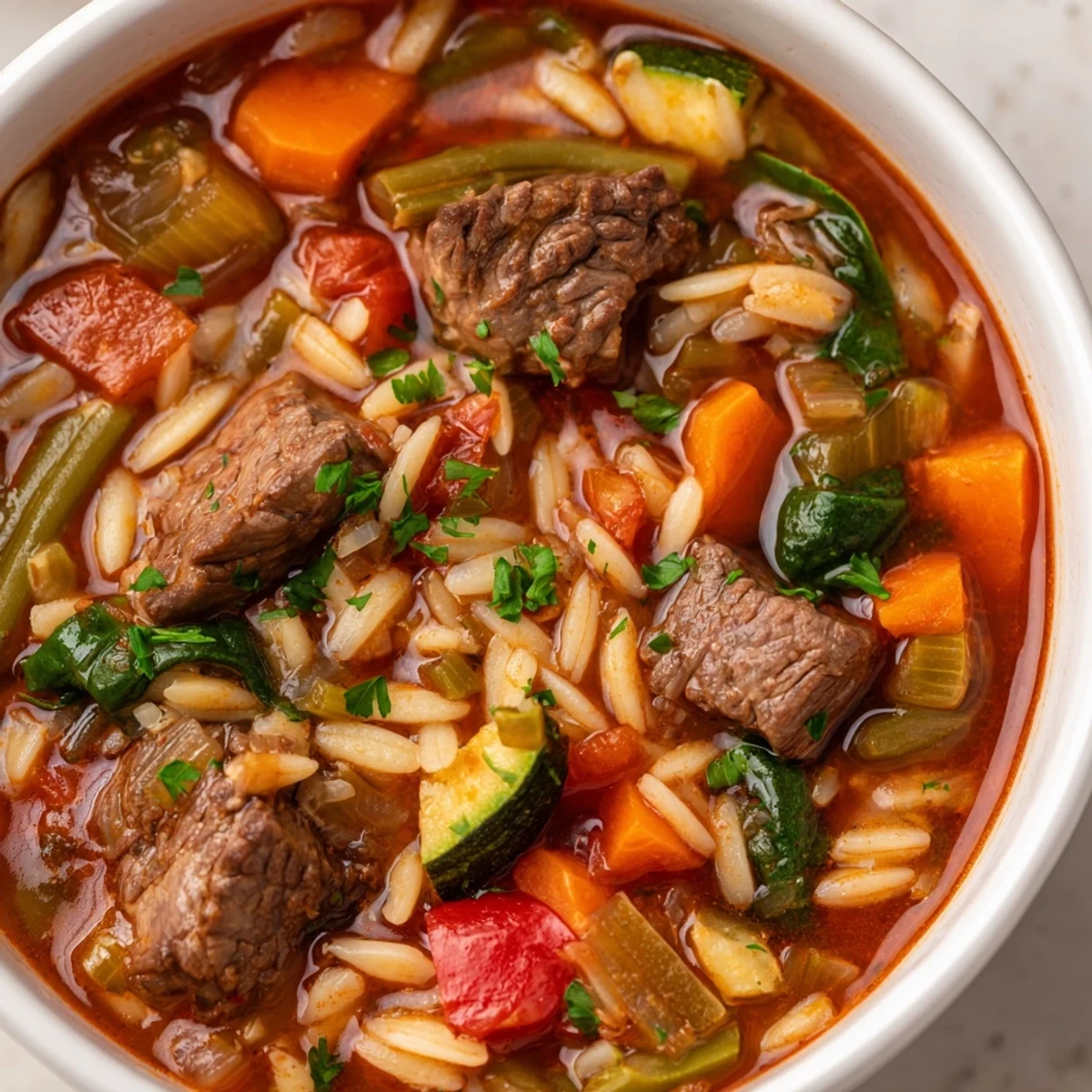
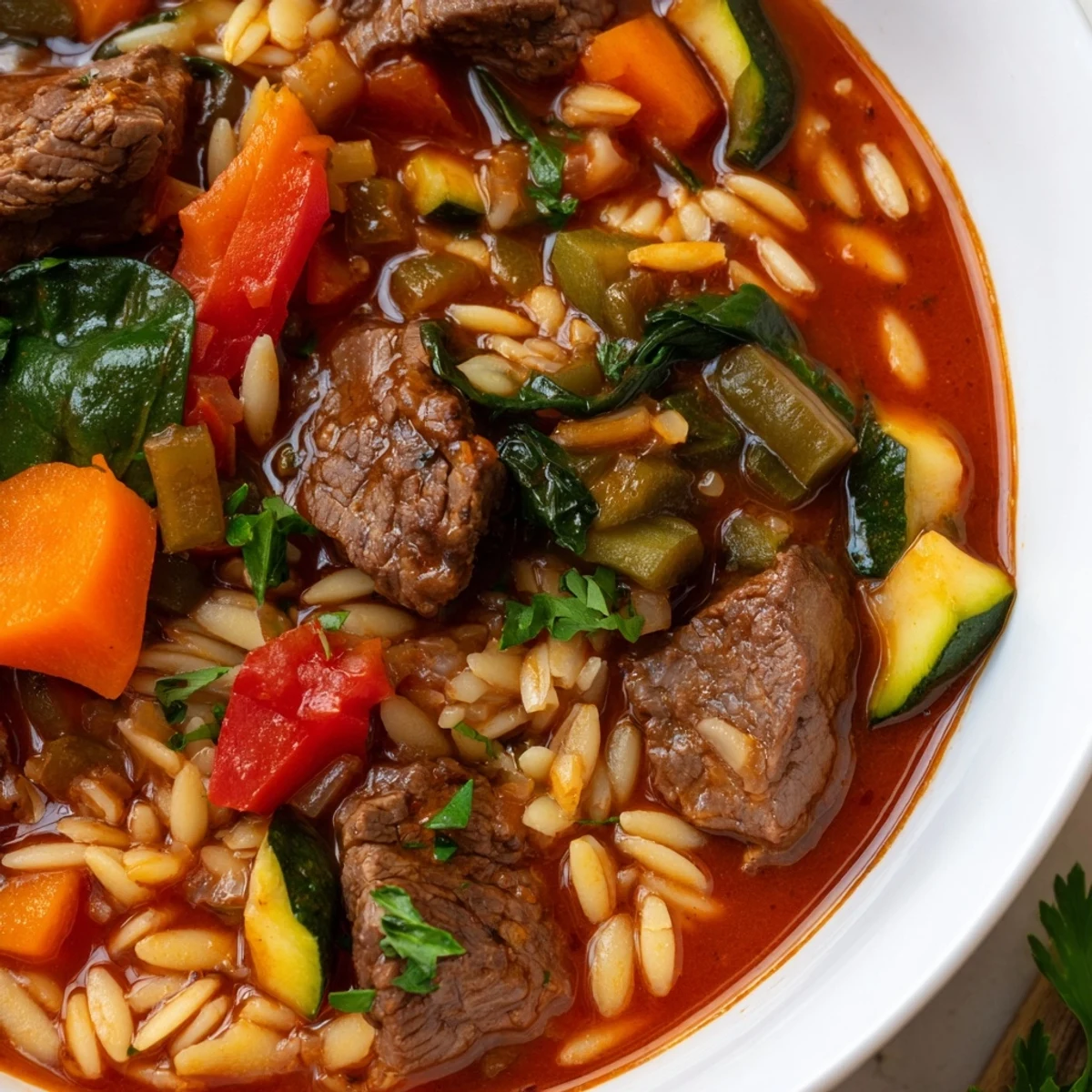
Save This satisfying soup combines tender chunks of beef stew meat with small orzo pasta and a colorful array of garden vegetables including carrots, celery, bell pepper, zucchini, and green beans. Simmered slowly in a beef broth base infused with tomatoes and herbs, the flavors develop beautifully over an hour of gentle cooking. The result is a hearty, nourishing bowl that's perfect for cold weather or whenever you need something comforting.
The smell of beef stewing with tomatoes and herbs always pulls me back to rainy Sunday afternoons when my grandmother would let me stand on a chair to stir the pot. This soup started as her version, but I kept adding more vegetables until the bowl looked like a garden harvest. Now it is the one recipe my family requests when the first cold snap hits.
Last winter my neighbor came over shivering after her car broke down, and I served her this soup straight from the stove. She sat at my kitchen table wrapped in a blanket, and by the time she finished her bowl, she was smiling and asking for the recipe. Sometimes soup fixes more than just hunger.
Ingredients
- 1 lb beef stew meat: Chuck roast cut into small bites works best here because the long simmer time transforms tough fibers into melting tenderness
- 2 tbsp olive oil: Use a neutral oil with a decent smoke point since you will be searing at medium-high heat
- 1 large onion: Yellow onions develop a sweetness as they cook which balances the beefs richness
- 3 cloves garlic: Add this after the onions have started softening so it does not burn and turn bitter
- 3 carrots: Slice them about the same thickness as your celery so everything cooks evenly
- 2 celery stalks: The subtle aromatic base that makes the broth taste professionally developed
- 1 red bell pepper: Brings a natural sweetness and vibrant color that makes the bowl inviting
- 1 zucchini: Dice it small so it does not turn mushy during the simmer time
- 1 cup green beans: Fresh ones hold their texture better than frozen, giving you something to bite into
- 1 can diced tomatoes: The juices dissolve into the broth creating that body you want in a hearty soup
- 4 cups beef broth: I use low-sodium so I can control the salt level myself
- 4 cups water: Prevents the broth from becoming too intense as it reduces
- 2 cups fresh spinach: Toss this in at the very end so it keeps its bright green color
- 3/4 cup orzo pasta: This tiny pasta absorbs flavor beautifully but can get soft if overcooked
- 1 tbsp tomato paste: Concentrates the savory depth without adding extra liquid
- 1 tsp dried thyme: Earthy and warm, this pairs naturally with beef and root vegetables
- 1 tsp dried oregano: Adds that classic herbaceous note that screams comfort food
- 2 bay leaves: Pull these out before serving unless you want someone to discover an unexpected surprise
- Salt and pepper: Taste at the end since the broth will reduce and concentrate
- 1/4 cup fresh parsley: Sprinkle this on top to brighten the whole bowl with a fresh finish
Instructions
- Sear the beef:
- Heat the olive oil in your largest pot or Dutch oven over medium-high heat until it shimmers. Add the beef in batches so you do not crowd the pan, letting each piece develop a deep brown crust on all sides.
- Build the base:
- In the same pot, toss in the onion, garlic, carrots, and celery. Cook them for about five minutes, stirring occasionally, until the onions turn translucent and the kitchen starts to smell amazing.
- Add the vegetables:
- Stir in the red bell pepper, zucchini, and green beans. Let them cook for another three minutes to soften slightly before the liquid goes in.
- Combine everything:
- Return the beef to the pot along with any juices on the plate. Pour in the diced tomatoes with their juice, tomato paste, beef broth, water, thyme, oregano, bay leaves, and a generous pinch of salt and pepper.
- Simmer gently:
- Bring the soup to a boil, then lower the heat until it is just bubbling. Cover it and let it simmer for thirty minutes, giving the beef time to become fork-tender.
- Cook the orzo:
- Uncover the pot and stir in the orzo pasta. Let it simmer for about ten minutes, stirring occasionally so it does not stick to the bottom.
- Finish with spinach:
- Stir in the fresh spinach and watch it wilt down into the broth. This only takes a couple of minutes.
- Serve it up:
- Fish out the bay leaves and ladle the hot soup into bowls. Top each one with a sprinkle of fresh parsley.
 Save
Save My daughter now asks to help chop the vegetables every time I make this, standing on the same chair I used as a child. She insists that her chopping makes it taste better, and honestly, I think she might be right.
Making It Your Own
Sometimes I swap in diced butternut squash for the zucchini when autumn arrives, and the sweetness balances the beef beautifully. You can also use spinach, kale, or chard depending on what looks freshest at the market.
Storage And Leftovers
This soup actually tastes better the next day after the flavors have had time to mingle in the refrigerator. Store it in an airtight container for up to four days, but keep the orzo separate if you plan to freeze portions.
Serving Suggestions
A chunk of crusty bread for dipping is practically mandatory, and a simple green salad with vinaigrette cuts through the richness.
- Grilled cheese sandwiches make this a complete meal that kids and adults both love
- A glass of full-bodied red wine pairs wonderfully with the beef and tomatoes
- Top with grated Parmesan right before serving for a salty finish
 Save
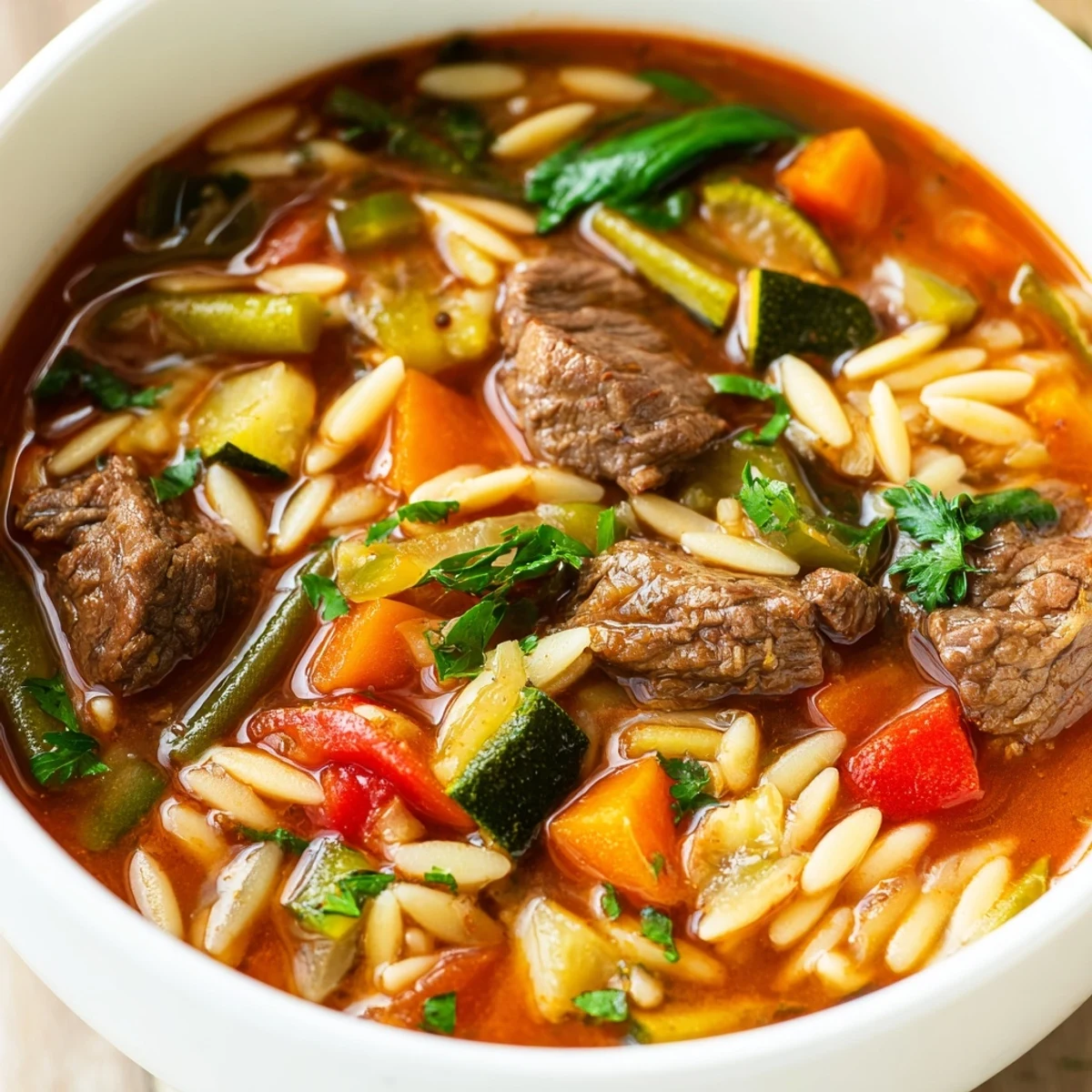
Save There is something profoundly satisfying about watching a empty bowl get scraped clean, especially when the weather outside is dreary.
Recipe FAQs
- → Can I make this soup ahead of time?
-
Absolutely! This soup actually tastes better the next day as flavors have time to meld. Store in the refrigerator for up to 4 days, or freeze for up to 3 months.
- → What cut of beef works best?
-
Beef chuck or stew meat is ideal as it becomes tender during slow simmering. Look for well-marbled pieces that will break down nicely in the broth.
- → Can I substitute the orzo pasta?
-
Yes! Small pasta shapes like ditalini, small shells, or even rice work well. For gluten-free options, use quinoa or rice instead.
- → How do I prevent the orzo from getting mushy?
-
Add the orzo during the last 10 minutes of cooking and keep an eye on it. If storing leftovers, you may want to cook pasta separately to prevent it from absorbing too much broth.
- → What vegetables can I add or swap?
-
Feel free to use whatever vegetables you have on hand. Potatoes, butternut squash, kale, or Swiss chard make excellent additions or substitutions.