
 Save
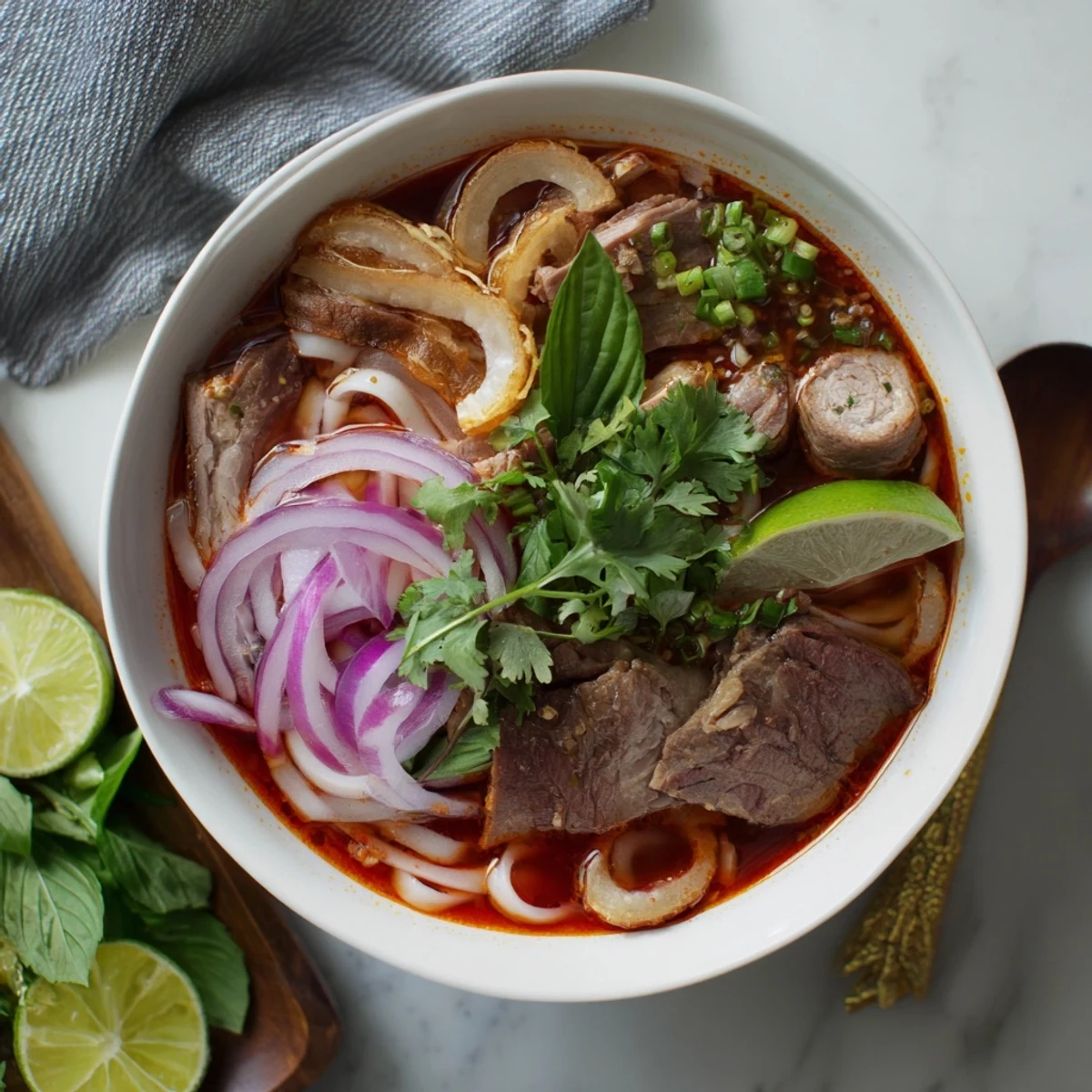
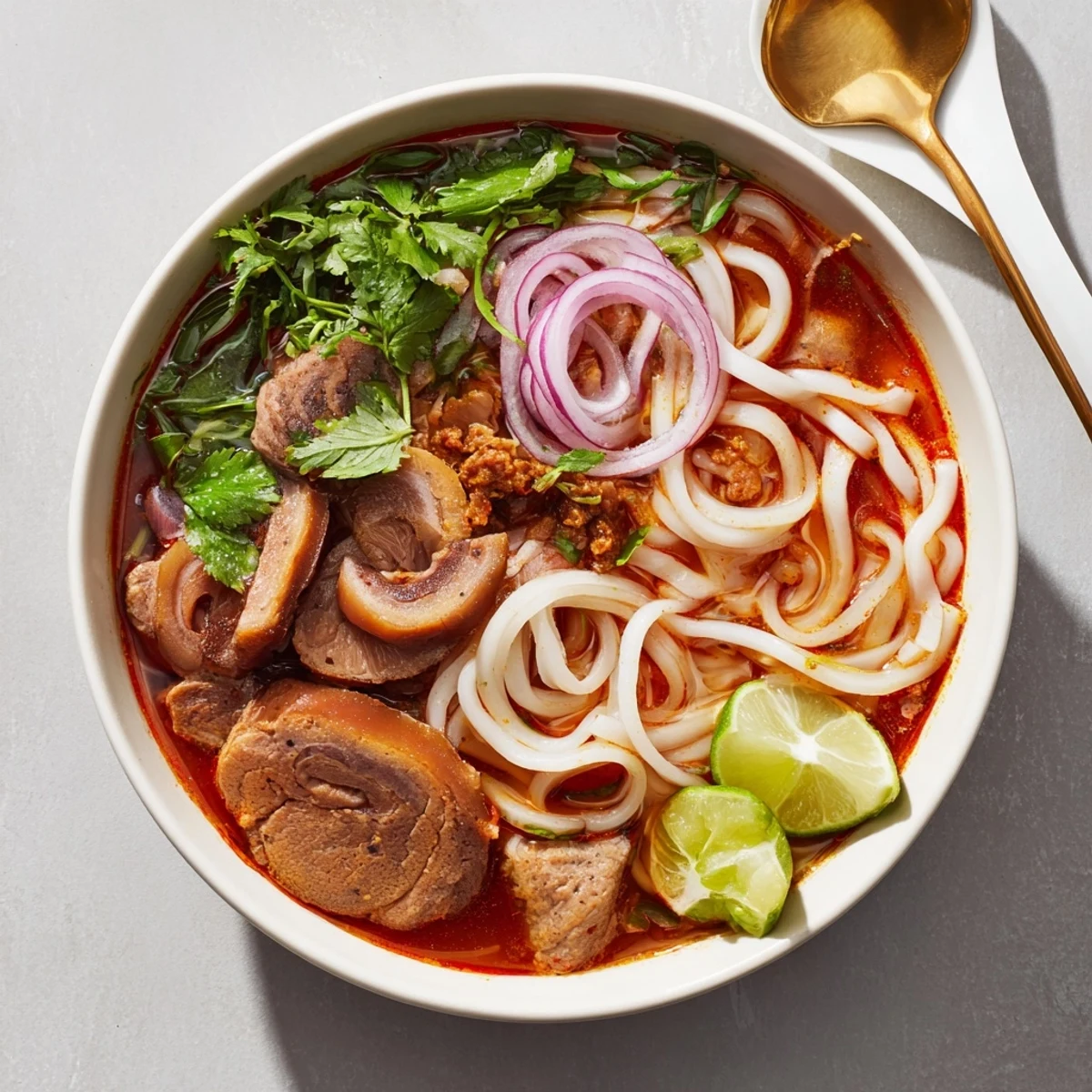
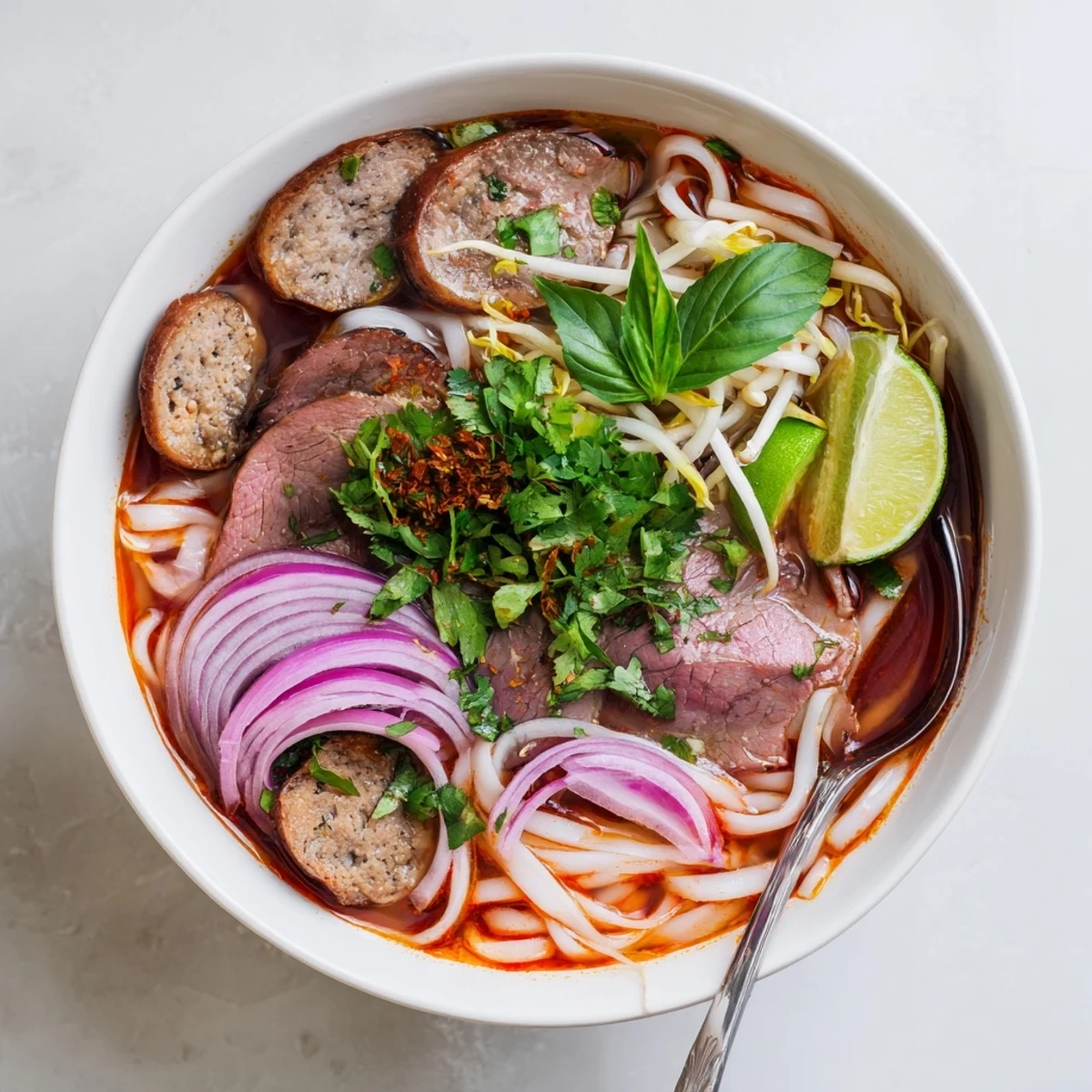
Save This traditional Vietnamese specialty from Hue delivers an aromatic, spicy broth infused with lemongrass, ginger, and shrimp paste. The rich base simmers for two hours with beef shank and pork hock, creating depth and tenderness. Thick round rice noodles soak up the fragrant liquid while thin slices of brisket, pork blood cubes, and sausage provide variety. The signature red chili oil adds both vibrant color and heat. Fresh herbs, lime, bean sprouts, and banana blossom complete each bowl, offering crisp contrasts to the warming, spicy soul of this beloved central Vietnamese dish.
My grandmother would wake at dawn to start the broth, the house slowly filling with lemongrass and star anise until you could taste the air before even stepping into the kitchen. She never measured anything, dropping rock sugar into the pot with the confidence of someone who has made a thousand bowls.
I spent three years trying to recreate that broth, burning through batches of shrimp paste and overcooking countless pieces of beef shank. The day I finally served my husband a bowl that made him close his eyes and nod silently, I called my grandmother immediately.
Ingredients
- Beef shank, bone-in: The marrow and bones create the rich foundation, so do not substitute with boneless meat
- Pork hock: Adds essential collagen and body to the broth while providing tender meat for serving
- Lemongrass: Bruise the stalks with the back of your knife to release the oils before adding to the pot
- Shrimp paste: This is the soul of the dish, so do not skip it despite the intense smell when raw
- Rock sugar: Dissolves more slowly than regular sugar, giving the broth a rounded sweetness
- Annatto seeds: Mostly for that signature reddish orange hue that makes the bowl look authentic
- Thick rice noodles: The round, chewy noodles are nonnegotiable, thin noodles will not hold up to the bold broth
- Cha lua: Vietnamese pork sausage adds a bouncy texture that contrasts beautifully with the beef
Instructions
- Start the broth:
- Bring the beef shank and pork hock to a boil in water, then drain and rinse everything clean to remove any impurities that would cloud your broth
- Build the flavor:
- Return the meat to the pot with fresh water and add the bruised lemongrass, halved onion, smashed garlic, and sliced ginger
- Season and simmer:
- Add fish sauce, salt, both sugars, and shrimp paste, then let the broth gently bubble for 2 hours until the meat is fork tender
- Prepare the meats:
- Remove the beef shank and pork hock, slice them into bite sized pieces, and strain the broth through a fine mesh sieve
- Make the chili oil:
- Infuse oil with annatto seeds until red, discard the seeds, then cook shallots and garlic before stirring in chili flakes
- Cook the noodles:
- Boil the thick rice noodles according to package directions, drain well, and divide them among serving bowls
- Assemble the bowls:
- Layer the sliced meats, sausage, and optional blood cubes over the noodles, then ladle the piping hot broth over everything
- Finish with flair:
- Drizzle with the red chili oil and let everyone add their own garnishes of herbs, sprouts, lime, and sliced chilies
 Save
Save Watching my kids now hover over their bowls, inhaling the steam before cautiously adding more chili oil, I feel like I am passing down something more than a recipe. The broth connects us to a place and time none of them have ever known.
Building a Better Broth
A piece of pineapple or a few dried shrimp added during the simmer can take your broth from good to unforgettable. The pineapple adds a subtle sweetness that balances the shrimp paste intensity.
Finding the Right Heat Level
I keep the chili oil on the table and let everyone decide their own adventure. Some days I want just a hint of warmth, other times I am sweating through the entire bowl and reaching for more.
The Art of Garnishing
A properly garnished bowl is like a little garden, with banana blossom adding crunch, herbs bringing freshness, and that squeeze of lime waking everything up. The garnishes are not optional, they are what makes each bite dynamic.
- Have all garnishes prepped before you start assembling the bowls
- Add delicate herbs right before serving so they do not wilt
- Serve lime wedges on the side so guests can adjust acidity
 Save
Save There is something about a steaming bowl of bun bo hue that feels like coming home, no matter where you are or how far you have traveled.
Recipe FAQs
- → What makes Bun Bo Hue different from pho?
-
Bun Bo Hue originates from central Vietnam and features a spicier, more complex broth with lemongrass, shrimp paste, and chili oil. The noodles are thicker and rounder than pho's flat rice noodles, and the soup typically includes pork hock and sometimes pork blood cubes alongside beef.
- → Can I make this less spicy?
-
Absolutely. Reduce the amount of chili flakes in the aromatic oil and serve extra chili on the side for those who want more heat. The broth's depth comes from lemongrass and shrimp paste, not just spice, so the flavor remains satisfying even with less heat.
- → Where can I find thick round rice noodles?
-
Look for them at Asian grocery stores labeled as bun bo Hue noodles or banh hoi. Some well-stocked supermarkets carry them in the international aisle. If unavailable, thicker udon noodles can work in a pinch, though the texture will differ slightly.
- → Is shrimp paste essential?
-
Shrimp paste (mam ruoc) provides the signature depth and umami characteristic of authentic Bun Bo Hue. While you can substitute with extra fish sauce, the flavor profile will change. If unavailable, try adding a small amount of fermented soybean paste for similar complexity.
- → Can I prepare the broth in advance?
-
Yes, the broth actually improves after resting overnight in the refrigerator. This allows the flavors to meld and deepen. Simply cool, refrigerate, then remove any solidified fat before reheating. Slice the meats and assemble fresh when ready to serve.
- → What can substitute for pork blood cubes?
-
Pork blood cubes are traditional but entirely optional. You can omit them or substitute with extra beef brisket, tofu cubes, or additional cha lua sausage. The dish remains delicious and satisfying without this ingredient.